




A leasehold timeshare is a form of vacation ownership that gives you the right to use a resort property for a defined term rather than indefinitely. It is also one of the more misunderstood corners of the vacation ownership market. Once the leasehold term ends, the rights revert to the developer or landowner. That built-in expiration date might sound like a drawback at first, but for the right buyer, it’s actually one of the model’s most appealing features. This post breaks down how leasehold timeshares work, how they compare to deeded ownership, what to know about Disney Vacation Club’s leasehold structure, and how Fidelity Real Estate can help you buy or sell on the resale market.
- Leasehold vs. Deeded Timeshare: What's the Difference?
- What Are the Pros of a Leasehold Timeshare?
- What Are the Cons of a Leasehold Timeshare?
- Disney Vacation Club: The Best-Known Leasehold Timeshare
- Frequently Asked Questions About Leasehold Timeshares
- Ready to Take the Next Step?
- Already Own DVC Points?
Leasehold vs. Deeded Timeshare: What’s the Difference?


These two ownership models represent the two main ways vacation ownership is structured.
Deeded (fee simple) timeshares give the buyer a permanent ownership interest in real estate. That interest can be passed down to heirs indefinitely. There’s no expiration date built into the contract.
Leasehold timeshares, by contrast, grant a time-limited right to use a property—commonly for 40 to 99 years. When the lease term ends, rights expire and revert to the developer or the underlying landowner.
It’s worth clarifying a common misconception: a leasehold is still a real property interest. It simply comes with an end date. This structure is widely used in real estate markets beyond timeshares. Investopedia notes that leasehold arrangements are common in Hawaii, New York City co-ops, and much of the United Kingdom. That context lends the model legitimacy and helps explain why well-known brands like Disney have adopted it.
What Are the Pros of a Leasehold Timeshare?
Leasehold vacation ownership offers several real advantages, particularly for buyers who want structure and flexibility.
- Lower upfront cost. Buyers pay for a defined period of enjoyment, not perpetual ownership—which often translates to a more accessible price point.
- No perpetual obligation. When the lease ends, so do the associated maintenance fees and ownership responsibilities.
- A built-in exit. Deeded timeshares are notoriously difficult to exit early. A leasehold’s end date offers a structured, predictable conclusion to ownership.
- Brand-managed quality. Leasehold products are often tied to major resort systems with consistent quality standards—Disney Vacation Club being the clearest example.
- Points-based flexibility. Many leasehold timeshares use a points-based booking system, which offers more flexibility than fixed-week deeded ownership.
That said, leasehold ownership isn’t the right fit for everyone. Understanding the trade-offs is essential before moving forward.
What Are the Cons of a Leasehold Timeshare?
Like any form of vacation ownership, leasehold timeshares come with limitations worth considering carefully.
- Ownership expires. Buyers who want an asset to pass on indefinitely will find leasehold ownership limiting by design.
- Resale value can decline over time. The fewer years remaining on a lease, the less appealing it is on the secondary market—and the lower the resale value may be. For a deeper look at how timeshare values shift over time, our guide on timeshare values over time offers helpful context.
- Leasehold ≠ traditional real estate appreciation. Some buyers assume a leasehold timeshare will appreciate like freehold property. It generally won’t. Timeshares are vacation products first—they’re not financial instruments, and they should never be purchased with the expectation of profit.
- Maintenance fees continue throughout the lease. Annual dues apply for the full duration of ownership, regardless of how often you use your points. Fidelity’s post on Disney Vacation Club maintenance fees explains how these fees work in practice.
Disney Vacation Club: The Best-Known Leasehold Timeshare
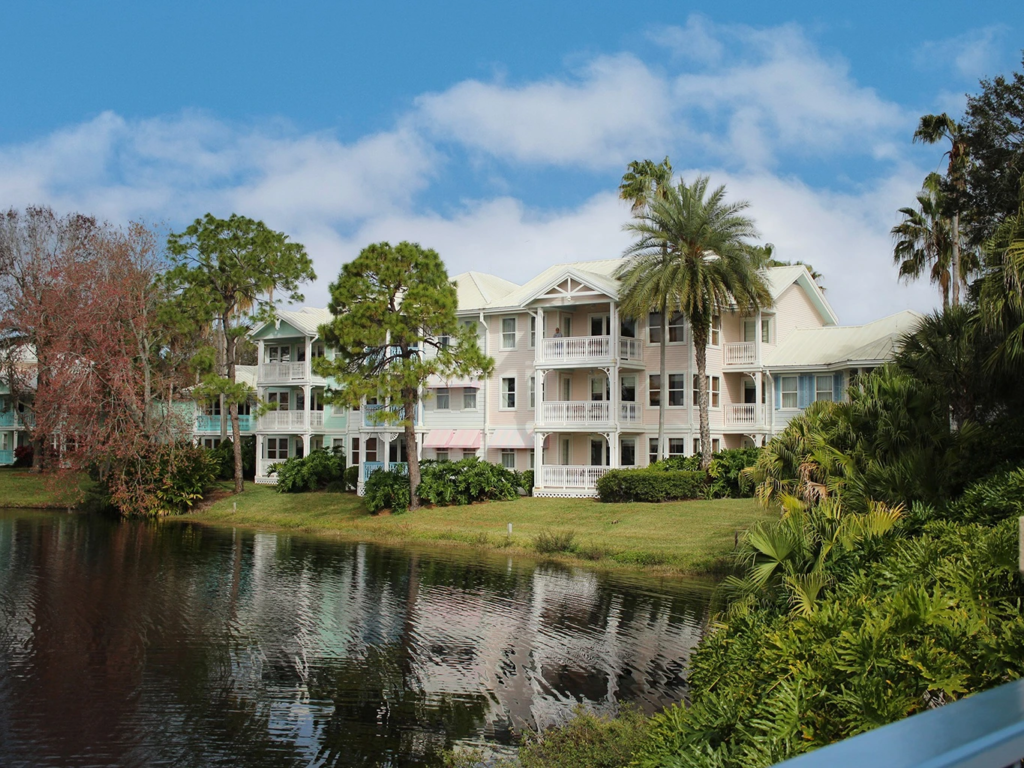




No brand illustrates the leasehold model more clearly—or more successfully—than Disney Vacation Club (DVC).
DVC members purchase points tied to a Home Resort. Those points can then be used to book stays across DVC’s portfolio of resorts at Walt Disney World, Disneyland, and select international and cruise destinations. The program runs on a points-based system, giving members considerable flexibility in how and when they use their ownership.
Every DVC resort has a specific lease expiration date. Many contracts expire in 2042, though newer resorts extend further—Disney’s Saratoga Springs Resort & Spa, for example, expires in 2054. Buyers shopping the resale market should always confirm the expiration date of any specific contract before purchasing.
Despite the leasehold structure, DVC resale points tend to hold their value comparatively well on the secondary market. Strong brand loyalty and consistent demand from Disney fans help sustain resale activity even as expiration dates approach. For buyers exploring how to fund a purchase, our breakdown of Disney Vacation Club financing options is a useful starting point.
Fidelity Real Estate is Disney Vacation Club’s #1 resale broker and has closed more DVC resale transactions than any other company in the industry. Over 90% of DVC resale contracts listed with Fidelity sell within 30 days.
Frequently Asked Questions About Leasehold Timeshares
Ready to Take the Next Step?
A leasehold timeshare offers a structured, flexible, and often more affordable path to vacation ownership, particularly through Disney Vacation Club. For buyers who plan to use their points and value the experience over perpetual ownership, the model makes practical sense.
Interested in buying DVC resale points? Browse current listings in our online marketplace, where competitive resale prices and an expert team make the process seamless.
Already Own DVC Points?
If you already own DVC points and are thinking about selling, Fidelity Real Estate can help. Travel preferences change, and life circumstances shift. We understand. As Disney Vacation Club’s leading resale broker, with no upfront listing fees and over 90% of contracts selling within 30 days, we make the process simple. Fill out the short form below, and a licensed Fidelity agent will be in touch at no cost to you.